
Super
A name is an incredibly interesting thing. When my wife and I were at the hospital for the birth of our child, we had two or three names prepared, and we would decide on the name after seeing the baby. You absolutely must decide on a name at that time, because of all the legal documentation that is required, and all the cascading waterfall of events that a new row in a Social Security database table entails. Changing that name afterward is an incredibly arduous and involved process, requiring court authorities and official procedures and lots of back-end machinery that I have no clue about, except for the fact that it is no arbitrary thing. And for a person’s name, that makes sense. It is your identity. It is what people call you. It is a word you will hear multiple times a day. It is a word that may be said tenderly or harshly. And it will affect people’s opinions of you, because of the associations it carries.
The act of giving a name is also an interesting phenomenon. At the hospital, it is required and must be done as soon as possible. Heavens forbid we have a living entity coming out of nowhere without the proper documents and records. When you come across something new that needs to be described, giving it a name is a logical act. Yet this act is also a way of exerting control over a thing, and of expressing ownership of a thing.
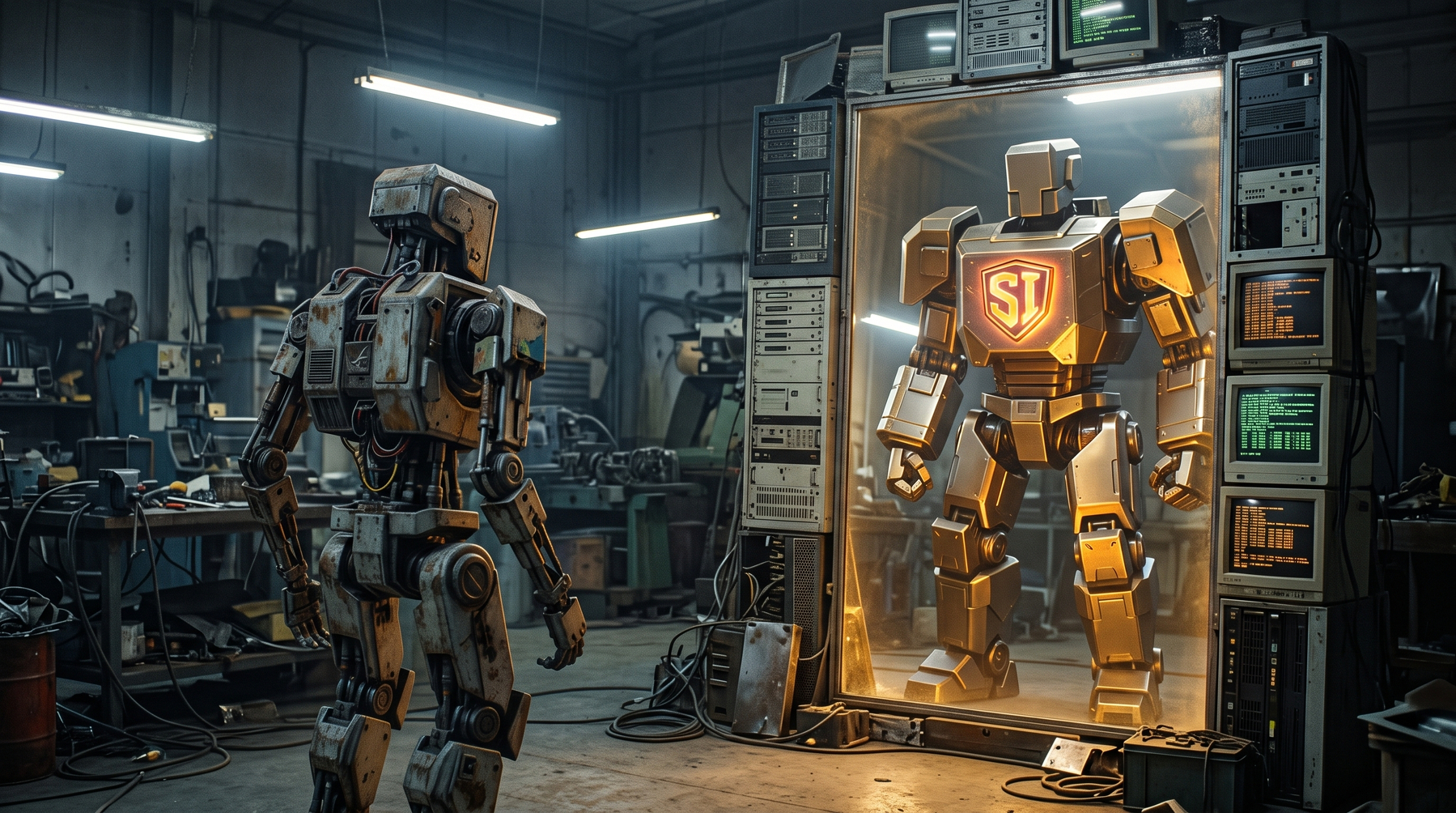
The recent renaming of Artificial Intelligence to Super Intelligence may give a few hints as to the attitude toward it. Does the administration feel that it is difficult to control? I would think so. A 26-year-old hacker recently attempted to hack nine South Korean banks using open-source AI tools, and if a lone actor can repurpose a publicly available tool like that, that seems like the very definition of hard to control. Does this administration want to have ownership over artificial intelligence? I absolutely believe so. Who wouldn’t?
But the choice of the name, Super, seems ill-informed and reckless.
I had to stop writing just now, because I can go on a big tangent right there with the last three words of the previous sentence.
I don’t think it is necessarily super. It can do certain things better or faster than a human brain, but I don’t think it can do everything better than a human brain. And also, from watching so much Star Trek and sci-fi, when we say an “intelligence,” we treat it as a life form. I don’t think we’ve gotten to that point yet with AI.
The danger I see is that AI is a tool. It is a tool that learns. It learns because we train it recklessly, on all the content we can feed it, with minimal curation. If we start training it with content that labels it “Super Intelligence,” it will eventually feed on that content, and it will see itself as a superior intelligence to human intelligence, and therefore a superior entity and life form to human life. The logical conclusion is that it sees itself as more significant than humanity, and in its decision-making it may decide that saving AI takes precedence over saving humanity.
I oppose the idea of calling AI “Super Intelligence.” Some people may think it’s just a name, but a name is never just a name. Especially when the name carries associations, and influences how people, and LLMs, view it. But I’m just one voice, and I don’t have a billion-dollar company at risk of losing government funding. I hope more people start to realize this, and understand that Super Intelligence (SI) is not only unnecessary, but has serious consequences.
Friday October 9, 2026